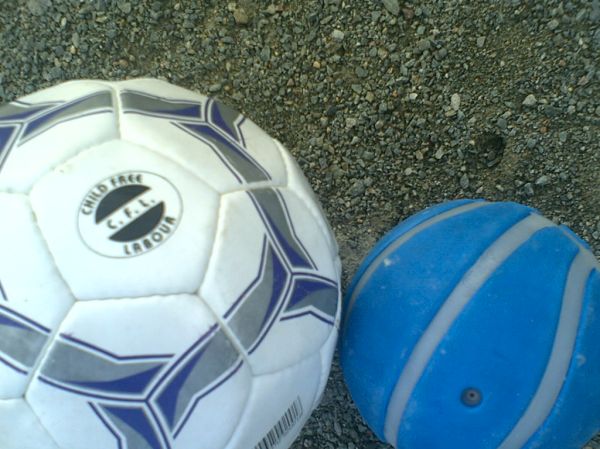
Watch five minutes of futsal after a lifetime of football and the pace alone tells you something different is going on. Futsal is played indoors on a hard court, with a smaller, heavier ball that barely bounces, and the differences run much deeper than the surface.
Smaller teams, smaller space, faster decisions
Futsal is played five-a-side rather than eleven, on a court roughly the size of a basketball court rather than a full pitch. With so little space and so few teammates, players touch the ball far more often and have far less time to decide what to do with it — which is why futsal is often credited with sharpening close control, quick turns and one-touch passing.
Different rules, different rhythm
Several rules mark futsal out from its outdoor cousin. There's no offside rule at all, substitutions are unlimited and can happen on the fly like in hockey, and the ball is restarted with a kick-in from the sideline rather than a throw-in. Goalkeepers face tighter restrictions too: once their team has committed a set number of fouls in a half, the opposition is awarded a direct free kick from a specified spot without a defensive wall, which punishes persistent fouling far more sharply than football's system.
- Ball: smaller, heavier, low-bounce, designed for control on hard courts
- Team size: five players per side, including the goalkeeper
- Restarts: kick-ins instead of throw-ins, no offside
- Fouls: accumulated team fouls trigger penalised free kicks
Neither version is a lesser cousin of the other — they're built for different environments and reward slightly different skills. Football rewards stamina, spacing and aerial ability across a huge pitch; futsal rewards close control, sharp turns and split-second decision-making in a tight box. Plenty of the game's best technicians credit futsal with shaping the touch they later brought to the full-size pitch.