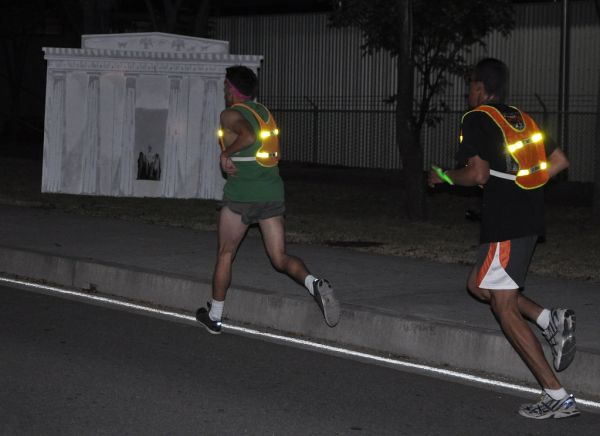
Good running form isn't about copying an elite athlete's stride; it's about a few basic habits that reduce wasted effort and unnecessary strain. Most runners, beginners and experienced alike, benefit from checking in on posture, cadence and footstrike every so often, because small inefficiencies tend to creep back in without anyone noticing.
Posture and arm carriage
Running tall, with a slight forward lean from the ankles rather than the waist, helps your body use momentum instead of fighting against it. Shoulders should stay relaxed and down, not hunched up towards the ears, and arms swing forward and back close to the body rather than crossing in front of the chest. Clenched fists and tight shoulders waste energy over a long run, so an occasional shake-out of the hands and shoulders can help you stay loose.
Cadence and footstrike
Cadence is simply how many steps you take per minute. Many runners naturally settle into an efficient rhythm once they stop overstriding, meaning they stop reaching the foot too far out in front of the body. Overstriding often leads to landing heavily on the heel with a straight leg, which acts like a small brake with every step. Aiming for quicker, lighter steps that land more underneath the hips, rather than consciously trying to land on a particular part of the foot, tends to smooth this out naturally.
Breathing and relaxation
Form also includes how you breathe. Steady, rhythmic breathing, using both the chest and the belly rather than short, shallow breaths, helps maintain a comfortable pace and can settle a stitch before it takes hold. Regularly scanning down the body, from jaw to shoulders to hands, and consciously relaxing any tension you find is one of the simplest form fixes available, and costs nothing.
Form is best improved gradually and by feel, not by trying to overhaul everything at once. Pick one cue, such as relaxed shoulders or quicker steps, and focus on it for a few runs before adding another. As with any change to training, ease into it and pay attention to how your body responds; if something causes pain rather than just unfamiliar effort, ease off and seek advice from a coach or physiotherapist. Over time, these small adjustments add up to running that feels noticeably lighter and more sustainable.